Your daily calorie burn is not just your workout calories. It’s the total number of calories you burn from resting, moving, eating, and training - and the fastest way to estimate it is to calculate your resting burn, apply an activity multiplier, check it with wearable data, and test it for 2 to 4 weeks.
If I wanted a working estimate fast, I’d do this:
A few numbers matter right away:
Here’s the short version: start with a formula, don’t double count exercise calories, use weekly averages instead of single-day data, and trust your 2-to-4-week weight trend more than any calculator.
If your average body weight stays within about ±0.5 lb while eating the same calories, you’re likely close to maintenance. If not, adjust by about 100 to 150 calories and test again.
That’s the full process in plain English.

How to Calculate Your Daily Calorie Expenditure (TDEE): 4-Step Process
Start with your resting burn. It sets the baseline for the rest of your TDEE estimate. For most people, the Mifflin-St Jeor equation is the best general-use formula for this job. It gives you the base number you'll use in the next step.
This formula uses four inputs: your sex, weight, height, and age. If you're using U.S. units, convert pounds to kilograms and inches to centimeters first.
Then plug your numbers into the formula:
Here's what that looks like in practice: a 35-year-old woman who weighs 150 lbs (68 kg) and is 5'5" (165 cm) would land at about 1,375 calories per day at rest. That's her resting baseline, and it's the number she'd use before adding activity.
One simple rule: recalculate after a 10 to 15 lb change in body weight.
The Mifflin-St Jeor equation predicts RMR within 10% of lab-measured values for 82% of normal-weight adults, but that accuracy drops to about 70% for people with obesity and 71% for trained athletes.
That matters because formulas estimate. They don't measure. Body composition can shift the result quite a bit. Muscle tissue burns roughly 6 calories per pound per day at rest, while fat burns about 2 calories per pound. On top of that, calorie restriction can lower resting burn beyond what weight loss alone would predict.
So think of your result as a solid starting point, not a fixed fact.
For most people, Mifflin-St Jeor is enough. But some cases call for direct testing.
Indirect calorimetry measures your actual oxygen use and carbon dioxide output to calculate resting calorie burn directly. Formula-based estimates often come with a 200 to 400 calorie margin of error, and that can be a big deal when you're trying to dial in nutrition.
Benchmark Body Metrics' Metabolic Test uses direct metabolic testing to measure your resting metabolic rate. It can help if you've hit a weight-loss plateau that has lasted more than two weeks even with diligent tracking, if you're taking a GLP-1 medication like Ozempic or Wegovy, or if you're an elite athlete with unusually high lean mass. In those situations, direct testing gives you a better place to start.
Next, add movement, workouts, and digestion to estimate your full daily burn.
Your resting burn is the starting point. To estimate your full daily calorie burn, multiply it by an activity factor that covers movement, exercise, and digestion.
Use your resting burn from Step 1 as the base, then choose the activity level that best matches your day-to-day life. This multiplier has the biggest impact on your TDEE estimate.
| Activity Level | Multiplier | Real-World Example | Daily Steps |
|---|---|---|---|
| Sedentary | 1.2 | Desk job, drives everywhere, little to no exercise | < 4,000 |
| Lightly Active | 1.375 | Desk job + 1–3 light workouts/week (e.g., yoga, walking) | 5,000–7,000 |
| Moderately Active | 1.55 | Active-standing job (teacher/nurse) OR desk job + 3–5 moderate workouts/week | 7,000–10,000 |
| Very Active | 1.725 | Physical job (e.g., construction) + regular training | 10,000–14,000 |
| Extra Active | 1.9 | Manual labor plus daily training, or professional athlete | 14,000+ |
If you're not sure, go with the lower option and adjust later. That's usually the safer call.
The activity multiplier already factors in your workouts, your day-to-day movement, and the energy your body uses to digest food. TEF usually makes up about 10% of your total daily intake, and it's already built into standard TDEE multipliers. So there’s no need to run a separate TEF calculation.
If you use an activity multiplier, don’t add tracker calories or gym calories on top. That’s where people often overshoot.
Here’s what the math looks like in a plain example.
Hypothetical profile: A 32-year-old woman, 5'5" (165 cm), 154 lbs (70 kg). She works a desk job but does 4 intense gym sessions per week.
So her estimated maintenance burn is 2,186 calories per day.
Next, use wearable and testing data to tighten the estimate.
Use wearables to check the estimate you built in Step 2. Your formula-based TDEE from Steps 1 and 2 gives you a solid starting point, but it still relies on a population-based estimate for your body. Wearables and clinical testing can help close that gap.
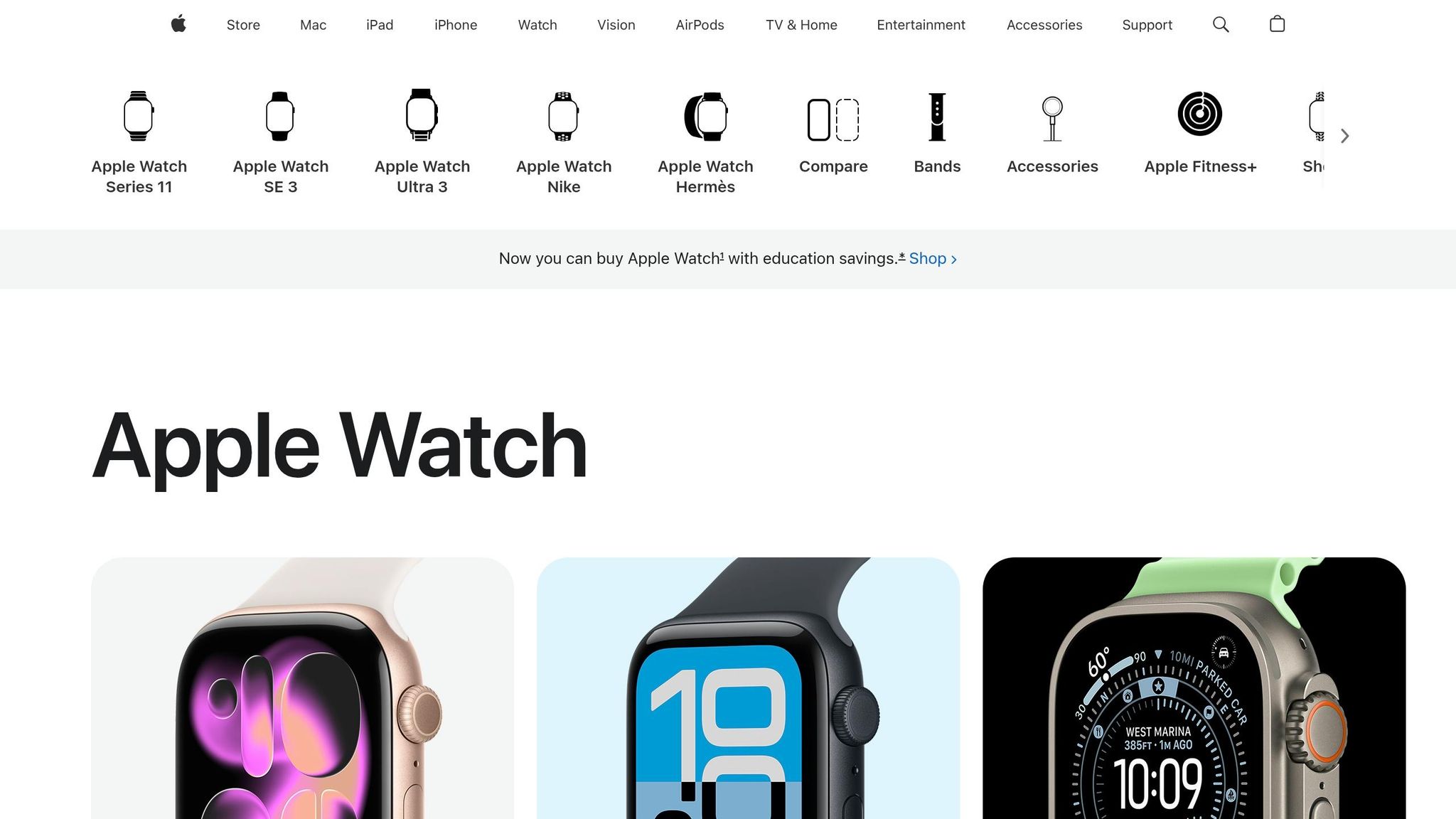
Most wearables estimate resting calorie burn from your profile data, then add active calories based on heart rate, movement, and steps. Treat that number as a check on your estimate, not a second TDEE calculation.
Wearables are best for spotting patterns over time, not for pin-point calorie counts. That matters even more during lifting and HIIT, where estimates can drift.
| Device | Strengths | Common Blind Spots | Best Use Case |
|---|---|---|---|
| Apple Watch | High-accuracy heart rate during intense workouts | Can overestimate if profile data is off | Workout intensity and exercise calorie burn |
| Fitbit | Strong step counting and activity trend tracking | Resistance-training estimates can be off by 33–42% | Daily step goals and consistency |
| Oura Ring | Sleep, recovery, HRV, and longer-term trends | Less accurate during HIIT or heavy lifting | Recovery and baseline trend monitoring |
A good rule of thumb: compare a 7-day average of Total Burn from your device against your formula-based estimate. One day can be noisy. A week gives you a cleaner read.

If you want a tighter baseline than a wearable can give you, measured RMR can help. A Metabolic Test at Benchmark Body Metrics measures your actual Resting Metabolic Rate through indirect calorimetry. From there, use that measured RMR as your baseline and add active calories from your device.
Body composition and fitness testing can narrow the estimate even more. A DEXA scan shows your lean body mass, which is the main driver of BMR. Each pound of lean tissue burns roughly 6 calories per day at rest, compared with about 2 calories per pound of fat. That kind of detail gives you better TDEE inputs before you move to the adjustment step.
VO2 Max testing can also help dial in workout-zone settings on your watch.
Once you’ve estimated your TDEE with formulas and wearable data, test it in the real world for 2 to 4 weeks. That estimate is just a starting point. Your day-to-day tracking is what tells you if the number holds up.
Keep your activity level about the same and eat at your calculated maintenance calories for at least 14 days. Log everything - oils, sauces, drinks, small bites - because people often underestimate calorie intake by 20% to 50%.
Weigh yourself every morning under the same conditions. Then look at 7-day rolling averages, not single weigh-ins. Day-to-day scale changes can bounce around by 2 to 4 lbs from water retention, glycogen storage, and gut content.
If your 7-day average weight stays within ±0.5 lb, your average intake is lining up with maintenance.
If your weight changes, use the rough 3,500-calorie-per-pound estimate to spot the gap. Say you lost 1 lb over 14 days. That usually means you were in about a 250-calorie daily deficit, so you’d add 250 calories to estimate maintenance.
If the trend moves, make small changes and test again.
| Weight Trend Over 2 Weeks | Calorie Adjustment to Find Maintenance Calories |
|---|---|
| Lost 1 lb | Add 250 calories/day to current intake |
| Gained 1 lb | Subtract 250 calories/day from current intake |
| Lost 2 lbs | Add 500 calories/day to current intake |
| No change (±0.5 lb) | Current intake = maintenance calories |
Make changes in steps of 100 to 150 calories every two weeks instead of making big cuts or big adds. Recalculate when your body weight changes by 5 to 10 lbs, since a lighter body burns fewer calories at rest.
Sleep can throw this off more than people think. Short sleep can cut next-day NEAT by about 200 calories, which may make your maintenance look lower than it is.
Start with the formula. Check it against wearable data. Then use 2 to 4 weeks of steady tracking to see if the number matches what’s happening on the scale.
When your weight trend, food log, and wearable data all point in the same direction, you’ve got a practical TDEE estimate you can use.
BMR is the energy your body uses at complete rest to keep basic functions going, like breathing, circulation, and cell repair. RMR is almost the same thing, but it's measured under less strict conditions, which is why people often use the two terms interchangeably.
TDEE is your total daily calorie burn. It includes your BMR plus the calories your body uses to digest food, move around, and exercise. Put simply, BMR is your starting point, while TDEE is the full 24-hour number used for weight management.
Choose your activity multiplier based on your typical week, not your most active day.
Look at three things together: how often you exercise, how many steps you usually get, and the kind of job you do. A simple way to sort it:
Your job can shift that up or down. If you sit at a desk most of the day, you may fit a lower category. If your work keeps you on your feet or doing physical labor, you may fit a higher one. And if you’re stuck between two options, round down.
If your wearable tracker and scale data don’t line up, treat both as estimates, not exact readings. Wearables and online formulas can be off by 5% to 20%.
Use your first calculation as a starting point. Then track two things the same way each day for two to three weeks:
After that, compare your 7-day average weight trend with your average intake. That gives you a better estimate of your actual daily calorie burn.


.svg)
