Your metabolism plays a key role in energy production, hormone regulation, and maintaining a healthy weight. But sometimes, it sends warning signals that things might be off. Here are seven signs that could mean it’s time to test your metabolism:
If you notice these signs, testing can reveal underlying issues like insulin resistance, thyroid dysfunction, or hormonal imbalances. Early detection can help prevent more serious conditions like Type 2 diabetes or heart disease. Pay attention to your body’s signals and consider speaking with a healthcare provider about metabolic testing.
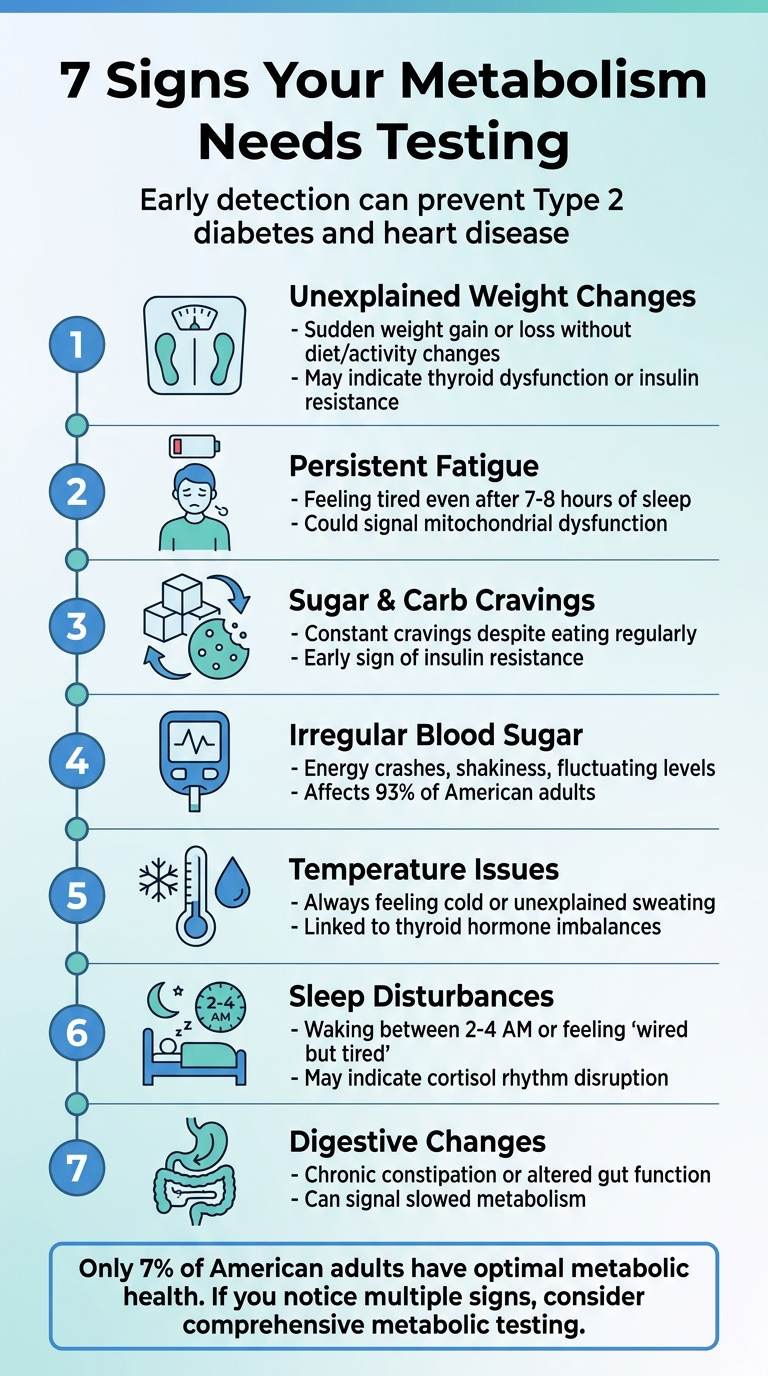
7 Warning Signs Your Metabolism Needs Testing
Unexpected weight fluctuations - like losing 10 pounds over 6–12 months or a 5% weight change in a month - can signal metabolic issues that routine checkups might overlook. These shifts often point to hormonal or endocrine imbalances.
Take thyroid dysfunction, for example. If your thyroid is underactive (hypothyroidism), your metabolism slows, making it harder to burn calories. On the flip side, an overactive thyroid (hyperthyroidism) can lead to rapid weight loss because your body burns calories faster than you consume them.
Another factor is insulin resistance, which encourages fat storage, especially around the abdomen, even if your diet hasn't changed. This type of weight gain is a hallmark of metabolic syndrome, a condition that affects nearly 40% of adults in the U.S..
"A major sign would be weight gain without changing any diet or lifestyle habits. A metabolism that is slowing down will require less energy."
- Courtney Pelitera, M.S., R.D.N., C.N.S.C.
Chronic stress is another player, as it raises cortisol levels. High cortisol not only promotes fat storage in the abdominal area but also interferes with thyroid function by disrupting the conversion of T4 to T3, the active thyroid hormone.
These weight changes are often tied to measurable biomarkers, offering a clearer picture of your metabolic health.
Unexplained weight changes often correspond to specific biomarkers that reveal underlying metabolic issues. Here's how they connect:
| Biomarker | Role in Metabolism | What Imbalance Indicates |
|---|---|---|
| TSH | Regulates thyroid hormone production | High levels suggest slowed metabolism (hypothyroidism) |
| Free T3 | Active hormone for energy use | Low levels mean fewer calories burned and fatigue |
| Fasting Insulin | Controls glucose uptake into cells | High levels point to insulin resistance and fat storage |
| HOMA-IR | Insulin resistance index | Elevated scores indicate reduced metabolic efficiency |
| Cortisol | Stress response hormone | Chronically high levels suppress thyroid activity and promote fat storage |
Natural muscle loss also plays a role. Starting in your 30s, you lose 3% to 8% of muscle mass per decade, and this accelerates after age 60. Since muscle burns more calories than fat, this decline slows your metabolism. For men, a 1% annual drop in testosterone starting in their 30s can lead to a 20–30% reduction by their 40s or 50s, further diminishing muscle mass and metabolic rate.
"As we lose muscle, our overall energy needs decrease. This is the primary reason that metabolism tends to slow down as you age."
- Brooke Bussard, M.D.
Weight changes often come with other symptoms like fatigue, brain fog, mood swings, and disrupted sleep. Even if your weight remains stable, a shift in body composition - losing muscle while gaining fat - signals a slowing metabolism. You might also feel unusually hungry soon after meals, which can indicate your body is struggling to switch between burning carbs and fat efficiently. Recognizing these signs early is key, and targeted lab tests can help identify the root cause.
If you've gained or lost 10 pounds without changing your diet or exercise habits, it's time to consider comprehensive metabolic testing. Rapid weight gain - like 2 to 3 pounds in a day or 5 pounds in a week - might indicate fluid retention rather than fat gain, which also warrants medical attention.
Ask your healthcare provider for tests that evaluate thyroid function (TSH, Free T3, Free T4), insulin sensitivity (fasting insulin, HOMA-IR), and hormone levels (estrogen, testosterone, cortisol). These tests can uncover metabolic issues before they escalate into conditions like Type 2 diabetes or heart disease. Comprehensive blood panels, covering over 100 markers such as ApoB, HDL, thyroid hormones, and testosterone, provide a detailed look at your metabolic health. Pair these with body composition analysis to assess fat, muscle, and visceral fat distribution for a complete picture.
Feeling drained even after a full 7–8 hours of sleep could point to metabolic inefficiencies. When your metabolism isn’t functioning properly, your cells struggle to turn food into energy, leaving you feeling sluggish no matter how much rest you get.
One major player is insulin resistance, which reduces your body’s ability to produce energy effectively. Thyroid dysfunction, particularly hypothyroidism, is another common cause. It slows down energy production and affects about 5% of Americans. On a cellular level, mitochondrial dysfunction - where ATP production is compromised - can also lead to persistent fatigue.
Another clue is the "tired but wired" sensation. You may feel exhausted during the day but suddenly energized at night, which can make falling asleep difficult. This happens when disrupted cortisol rhythms cause your body to release stress hormones like cortisol or adrenaline in response to low blood sugar. If you often wake up between 2:00 AM and 4:00 AM, this may be the culprit.
These patterns of fatigue often show up in diagnostic tests, offering measurable insights into what’s going wrong.
Blood tests can help pinpoint whether metabolic issues are behind your fatigue. For example, Hemoglobin A1C (HbA1C) provides a three-month snapshot of your average blood sugar levels and can reveal diabetes or prediabetes. Fasting insulin levels and the HOMA-IR index are also key tools for identifying insulin resistance.
Thyroid function tests, including TSH, Free T3, and Free T4, are crucial since low Free T3 is linked to reduced energy production. Cortisol rhythm testing, ideally done through a 4-point salivary or urinary test, can show whether your cortisol levels are following their natural cycle or are consistently elevated.
Micronutrient deficiencies are another factor to consider. Around 35% of Americans have low Vitamin D levels, which can contribute to fatigue. Deficiencies in Vitamin B12 and ferritin (a marker of iron storage) can impair mitochondrial function and oxygen transport, worsening fatigue and brain fog. A Complete Blood Count (CBC) can also help detect anemia, a common cause of prolonged tiredness.
These diagnostic markers offer valuable insights into the underlying causes of fatigue and its impact on daily life.
Metabolic fatigue doesn’t just make you tired - it affects your entire day. Since the brain relies heavily on energy, an inefficient metabolism can lead to brain fog, making it hard to focus or think clearly. Mood swings, irritability, and lower productivity often follow. You might also notice other symptoms like feeling unusually cold or experiencing digestive issues. Blood sugar fluctuations can further disrupt sleep by triggering nighttime cortisol surges, leaving you groggy in the morning.
If you’re getting enough sleep but still feel fatigued, it’s worth exploring comprehensive metabolic testing. Ask your doctor for a panel that includes:
"If someone is feeling sluggish, the most important thing they should ask a doctor for isn't one test but rather a detailed medical history to uncover why, along with a panel of focused tests to support or add to it."
- Dr. Elliot Dinetz, MD
For a more detailed analysis, consider panels that assess over 100 markers, including insulin, thyroid hormones, and micronutrient levels. Pairing these results with metabolic testing can reveal how efficiently your body burns calories at rest. These insights can help pinpoint the root cause of your fatigue and guide targeted treatments.
Constantly craving sugar and carbs might point to an underlying metabolic issue. When your cells become resistant to insulin, they struggle to absorb glucose for energy. This leaves them effectively "starving", even if you've just eaten. In response, your brain signals a need for quick energy sources like sugar and refined carbs. Hormonal imbalances also play a role - leptin resistance reduces feelings of fullness, while elevated ghrelin increases hunger. These cravings often appear long before standard blood tests detect any problems, acting as an early sign of declining insulin sensitivity. This makes them a key piece of the puzzle when assessing overall metabolic health.
Standard tests often miss the real culprit: glucose variability. These rapid spikes and dips in blood sugar can send false hunger signals. A Continuous Glucose Monitor (CGM) can track these fluctuations in real time. Additionally, fasting insulin levels above 8–10 µIU/mL can indicate insulin resistance, even if glucose levels appear normal. Tools like the HOMA-IR formula (fasting glucose × fasting insulin ÷ 405) and a Triglyceride-to-HDL ratio above 3.0 are also strong indicators of impaired insulin sensitivity. Comprehensive blood panels that evaluate over 100 markers, including insulin levels, thyroid hormones, and lipid ratios, offer a more complete picture of the metabolic factors driving these cravings.
Metabolic imbalances can create a frustrating cycle. Blood sugar crashes often lead to irritability and energy slumps within 1–3 hours after eating. To cope, many people turn to caffeine or snacks just to power through the day. These dips in energy can also bring brain fog, trouble focusing, and mood swings. For some, nighttime blood sugar drops trigger a cortisol spike, waking them up between 2:00 AM and 4:00 AM and further disrupting sleep. Recognizing these patterns early can help you break the cycle and improve your quality of life.
If sugar and carb cravings are a constant struggle, it’s worth exploring comprehensive metabolic testing. Ask your doctor to check fasting insulin levels, calculate HOMA-IR, and review a full lipid panel (including the Triglyceride-to-HDL ratio). Testing thyroid function (TSH, Free T3, and Free T4) and using a CGM for two weeks to track blood sugar variability can also provide valuable insights. These tests can help identify how your body processes energy and guide you toward solutions that address the root cause of your cravings.
Fluctuating blood sugar levels often indicate that your body is struggling to manage energy effectively. When glucose levels swing unpredictably, it can point to issues like insulin resistance, where glucose can't properly enter cells, leaving them without the fuel they need - even if you're eating regularly. This imbalance can lead to inflammation in various organs and increase the risk of conditions like heart disease, stroke, and Type 2 diabetes. Considering that roughly one-third of Americans have metabolic syndrome and fewer than 7% meet all five markers of optimal metabolic health, irregular blood sugar patterns are more common than many realize. These patterns, much like persistent cravings, highlight the importance of early metabolic testing.
A fasting blood glucose level of 100 mg/dL or higher is an early warning sign that your body may not be using insulin effectively. Typically, fasting glucose levels should fall between 70 and 99 mg/dL after 8 to 12 hours without food. However, a single fasting test provides only a brief snapshot. Glucose variability, even when average levels seem normal, can still stress your metabolism. A Continuous Glucose Monitor (CGM) is particularly useful for tracking these fluctuations in real-time, offering insights that standard one-time tests might miss. Meanwhile, an A1C test gives a broader view, reflecting the average blood glucose level over three months by measuring glycated hemoglobin. An A1C of 6.5% or higher is a diagnostic marker for diabetes.
| Diagnosis | A1C | Fasting Plasma Glucose | Oral Glucose Tolerance Test |
|---|---|---|---|
| Normal | Below 5.7% | 99 mg/dL or below | 139 mg/dL or below |
| Prediabetes | 5.7% to 6.4% | 100 to 125 mg/dL | 140 to 199 mg/dL |
| Diabetes | 6.5% or above | 126 mg/dL or above | 200 mg/dL or above |
These diagnostic tools, combined with other warning signs, provide a fuller picture of your metabolic health.
Irregular blood sugar levels can wreak havoc on your day with unexpected symptoms. Unlike predictable post-meal crashes, these fluctuations can strike at any time, making it hard to predict when you'll feel functional. Since the brain depends on a steady glucose supply, these swings can lead to brain fog, slower thinking, and trouble concentrating. Physical symptoms often include shakiness, trembling hands, dizziness when standing, heart palpitations, and cold sweats - your body's emergency response to dropping glucose. At night, blood sugar dips may even wake you up between 2:00 AM and 4:00 AM with racing thoughts, further disrupting your sleep.
Start with a Basic Metabolic Panel (BMP) to check blood sugar levels and kidney function. Be sure to fast for 8 to 12 hours beforehand for accurate results. Beyond standard glucose tests, consider asking for fasting insulin levels and have your doctor calculate HOMA-IR (Homeostatic Model Assessment for Insulin Resistance) to measure metabolic efficiency. An Oral Glucose Tolerance Test (OGTT) can also provide valuable insights by measuring blood sugar levels before and two hours after consuming a sugary drink, which is especially helpful for detecting prediabetes. For a deeper understanding, a CGM can track how your body responds to food, stress, and sleep in real-time. If your results are normal, retesting every three years is recommended, while those with prediabetes should test annually.
If you often feel cold while others are comfortable or experience unexplained bouts of sweating, it could be a sign that your metabolism isn't running smoothly. Your body generates heat as it burns calories, so when your metabolic rate slows, less heat is produced. For instance, cold hands and feet are common indicators of low thyroid function, which directly influences your resting metabolic rate. On the flip side, excessive sweating and heat intolerance might point to hypermetabolism. This occurs when elevated levels of Free T3 - the active thyroid hormone - cause your body to burn calories too quickly.
Thyroid hormones play a central role in converting food into energy and heat. Low Free T3 levels often show up as persistent cold intolerance and fatigue. However, relying solely on TSH (thyroid-stimulating hormone) doesn't provide the full picture. A thorough evaluation should include Free T3 and Free T4 to better understand your metabolic activity. Stress further complicates the situation - high cortisol levels can block the conversion of T4 (inactive thyroid hormone) into T3 (active thyroid hormone), slowing metabolism and reducing heat production. Nutrient deficiencies add another layer, with low Ferritin (iron storage), Vitamin B12, and Vitamin D levels potentially impairing mitochondrial function - the part of your cells responsible for producing energy and heat. These markers help connect hormonal imbalances to temperature regulation issues.
Temperature dysregulation can make everyday life uncomfortable. You might find yourself bundling up in a 72°F office while everyone else feels fine, or waking up drenched in sweat despite sleeping in a cool room. Beyond the physical discomfort, these symptoms often come with brain fog and trouble focusing, as your brain heavily relies on steady metabolic energy. The problem is compounded by the natural loss of muscle mass - up to 8% per decade starting in your 30s - as muscle tissue is more metabolically active than fat and generates more body heat. These challenges highlight the importance of early metabolic testing to address the root causes.
Addressing these imbalances starts with targeted testing. A comprehensive thyroid panel, including TSH, Free T3, and Free T4, is essential for evaluating thyroid hormone levels and their effectiveness. If cold intolerance is paired with ongoing stress, a morning serum cortisol test can help determine whether stress is interfering with thyroid function. For a more precise look at your metabolic rate, indirect calorimetry measures the oxygen you inhale and the carbon dioxide you exhale, providing insights into your resting metabolic rate. Testing Ferritin, Vitamin B12, and Vitamin D levels is also crucial for assessing mitochondrial function. Women experiencing temperature fluctuations should consider Estradiol and Progesterone testing, as declining estrogen levels can impact fat distribution and temperature regulation.
Your sleep patterns can provide important clues about metabolic imbalances, especially when paired with signs of temperature regulation issues.
If you find yourself waking up between 2:00–4:00 AM with racing thoughts or feeling drained despite spending the night in bed, it could point to metabolic stress. This "tired but wired" feeling often stems from disrupted cortisol rhythms. When blood sugar drops during the night (a condition known as nocturnal hypoglycemia), your body releases cortisol and adrenaline to stabilize glucose levels - frequently causing you to wake up. Chronic sleep deprivation, defined as getting fewer than 7 hours of sleep per night, can also wreak havoc on appetite hormones. Higher levels of ghrelin (which triggers hunger) and lower levels of leptin (which signals fullness) may leave you craving processed foods. Studies show that sleeping less than 7 hours per night can increase your risk of obesity by 38%.
Poor sleep quality is often reflected in specific diagnostic markers. For example, elevated fasting insulin levels and higher HOMA-IR scores signal insulin resistance, which can interfere with melatonin production - the hormone that governs your sleep-wake cycle. Sleep deprivation is also linked to increased inflammation, as seen in elevated high-sensitivity C-reactive protein (hs-CRP) levels, further complicating metabolic health.
"Inadequate sleep disrupts hormone levels, which dysregulates one's metabolism and makes individuals hungrier. When we are hungrier, we eat more, which leads to weight gain and potentially metabolic disease." - Dr. Rob Oh, Clinical Associate Professor at Stanford University
These markers help explain how poor sleep quality translates into daily challenges.
Sleep issues can create a feedback loop that negatively impacts your daily life. Brain fog, trouble focusing, and extreme fatigue are common - even if you’re technically spending 8 hours in bed. The fight-or-flight response, triggered by stress hormones, can prompt your liver to release extra glucose, leaving you feeling jittery and anxious. Unfortunately, relying on "catch-up" sleep over the weekend won’t undo the damage caused by chronic sleep deprivation. Recognizing these patterns can guide targeted testing to address the root causes.
To address sleep-related metabolic concerns, consider the following tests:
These tests can provide a clearer picture of how your sleep patterns connect to your overall metabolic health.
Your gut plays a key role in overall metabolic health, and shifts in digestion - like chronic constipation - may point to underlying metabolic issues that require attention.
Digestive changes, such as chronic constipation or altered transit time, can often signal metabolic dysfunction. For instance, hypothyroidism slows gut motility, while uncontrolled diabetes can damage nerves, both contributing to constipation. Additionally, your gut microbiome influences hormones like peptide YY and GLP-1, which regulate appetite and feelings of fullness. When these hormones are out of balance, your brain may not receive proper signals, leaving you feeling hungry even after eating.
"One of the many symptoms of a metabolic disorder can be a change in transit time." - Tamara Duker Freuman, MS, RD, CDN, CSDH
Certain tests can help pinpoint whether digestive issues stem from metabolic dysfunction. For example:
These tests, integrated into a broader metabolic evaluation, can help distinguish between isolated digestive problems and deeper metabolic concerns.
Digestive discomfort doesn’t just stay in your gut - it can ripple through your entire day. Bloating and constipation can lead to brain fog, fatigue, and difficulty concentrating. Blood sugar swings tied to poor gut health may cause irritability, anxiety, and disrupted sleep, leaving you feeling "tired but wired". This can affect your self-esteem and make even simple tasks feel daunting. Addressing these issues is crucial for improving both physical and emotional well-being.
If digestive changes persist alongside other metabolic symptoms, consider these tests:
Benchmark Body Metrics offers blood panels covering over 100 lab tests, designed to uncover the root causes of digestive and metabolic concerns. These insights can guide a more targeted approach to improving your gut and overall health.
Spotting early warning signs can make all the difference - some require immediate medical attention, while others call for monitoring and lifestyle changes. A large percentage of people show metabolic symptoms, and early testing can help clarify any concerns. Below, we break down when to take action and what steps to follow based on the urgency of your symptoms.
High-urgency symptoms need immediate medical attention. If you experience confusion, fainting, severe weakness, difficulty breathing, or symptoms that worsen quickly, don’t wait - seek urgent care right away.
Medium-urgency symptoms should prompt you to schedule a full metabolic evaluation within one to two weeks. These might include unexplained weight changes combined with persistent fatigue, chronic brain fog, or mood swings - especially if you feel "tired but wired", with daytime exhaustion and nighttime alertness. Women dealing with hair thinning, sensitivity to cold, and sudden weight plateaus should also prioritize testing, as these could signal thyroid-related metabolic issues.
Low-urgency symptoms can be discussed during your next routine checkup. These include mild fatigue, dry skin, or a family history of diabetes or heart disease. Even if symptoms seem minor, Dr. Bubu Banini of Yale Medicine emphasizes:
"We have clear thresholds for diagnosis, but if you're close to one, it's better to act now rather than wait".
When testing, go beyond basic glucose checks. Ask for markers like fasting insulin, HbA1c, TSH with Free T3/T4, and HOMA-IR. Most tests require fasting for at least 8 hours beforehand. To track progress and measure how well interventions are working, repeat tests every three to six months.
For a more detailed analysis, Benchmark Body Metrics offers blood panels with over 100 curated lab tests, giving you the insights you need to understand and improve your metabolic health over time.
Your metabolism often sends out warning signs long before standard lab tests detect any issues. The seven signs we've discussed - unexplained weight changes, persistent fatigue, sugar cravings, blood sugar irregularities, temperature sensitivity, sleep problems, and digestive troubles - are your body's way of signaling that something might be off. Spotting these patterns early gives you a chance to take action before these issues evolve into more serious health problems.
Here’s a reality check: fewer than 7% of American adults meet all five markers of optimal metabolic health. That means over 93% are dealing with some degree of metabolic dysfunction, often without realizing it until symptoms escalate. The good news? Early detection can lead to targeted changes that improve - or even reverse - metabolic markers in as little as three to six months.
Dr. Jossy Onwude, MD, puts it this way: "The goal should be metabolic efficiency - your body using energy in a way that's balanced, stable, and sustainable for you". Comprehensive testing offers a detailed look at your cellular health, identifying potential issues like insulin resistance, thyroid problems, or cortisol imbalances. With this information, evidence-backed strategies - such as tailored nutrition plans, strength training, and stress management - can help restore your metabolism’s efficiency.
If you’re noticing multiple symptoms, don’t wait for an official diagnosis. Comprehensive metabolic testing can uncover what’s happening beneath the surface. Benchmark Body Metrics provides blood panels with over 100 specialized lab tests, giving you insights into thyroid health, glucose control, inflammation, and nutrient levels - all essential for taking charge of your metabolic health.
If you're concerned about your metabolic health, it's worth discussing blood tests with your doctor. Some common tests to consider include:
These tests can uncover potential metabolic issues and help your doctor develop a treatment plan tailored to your needs.
Even if your glucose levels are within the normal range, you might still be dealing with insulin resistance. Signs to watch for include fatigue, energy crashes, mood swings, intense cravings, or abdominal weight gain. These subtle symptoms often show up before blood sugar levels become irregular and could hint at early stages of insulin resistance.
If symptoms become severe, appear suddenly, or worsen, seek medical attention right away. Examples include intense chest pain, trouble breathing, sudden weakness or paralysis, a severe headache, or any other signs of a medical emergency. These situations demand immediate evaluation at an urgent care center or through emergency services.


.svg)
