Want accurate metabolic test results? Preparation is key. What you eat, drink, and do in the days leading up to your test can influence your results, often leading to misleading data if not done correctly. Here's how to prepare:
Key Mistakes to Avoid: Breaking your fast, intense exercise, unmanaged stress, or not disclosing medications/supplements. These can all skew results.
Proper preparation ensures your test reflects your true metabolic baseline, helping healthcare providers create better plans tailored to your needs.
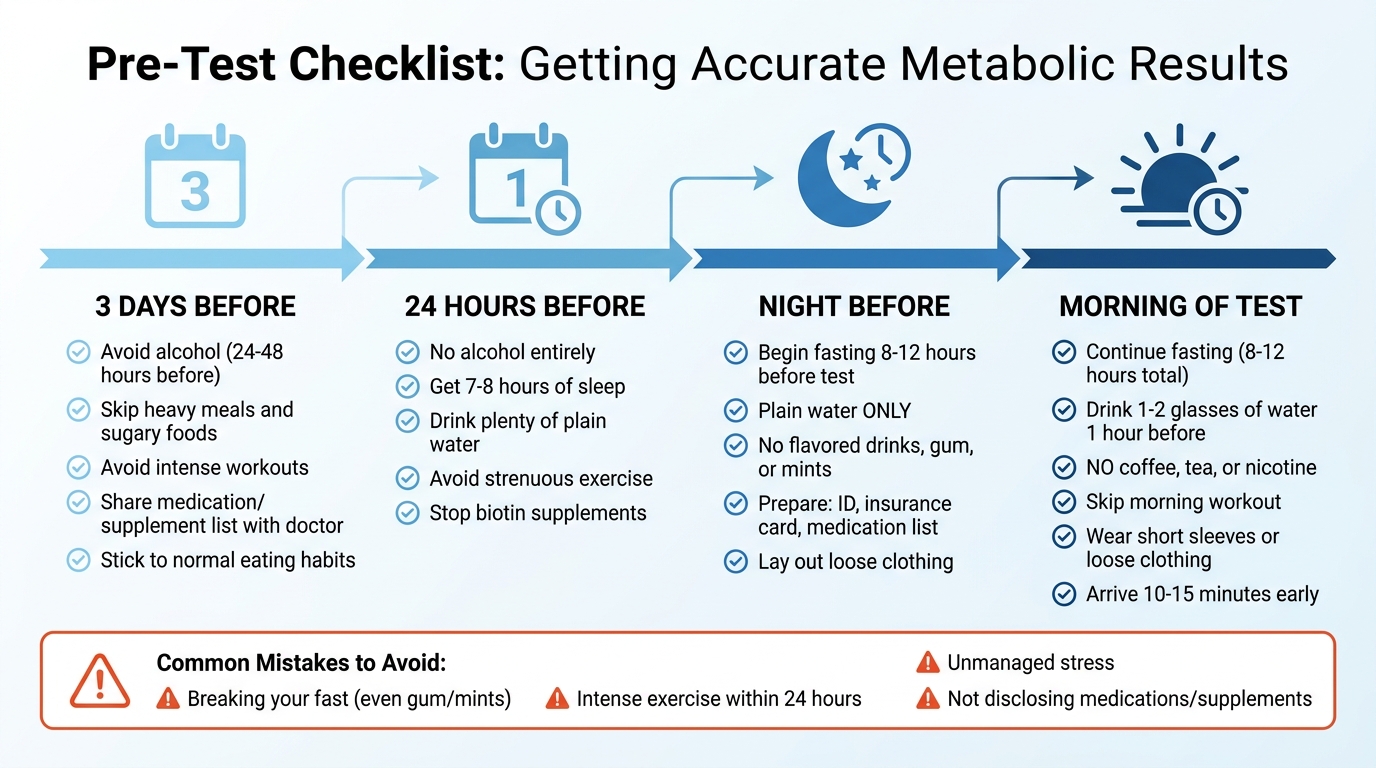
Pre-Test Preparation Timeline: 3 Days to Test Day Checklist
To ensure accurate test results, begin fine-tuning your diet, exercise habits, and supplement routines three days before your appointment. These small but important changes can help your results reflect your actual metabolic state rather than temporary fluctuations.
Steer clear of alcohol for 24-48 hours before your test. Alcohol can impact liver function, glucose levels, and hydration, potentially skewing your results. Similarly, avoid heavy, greasy foods and sugary meals. Foods like burgers or fried items can temporarily elevate lipid levels and triglycerides, while high-sugar foods can cause glucose spikes that linger in your bloodstream, distorting fasting measurements.
Instead, focus on balanced meals that include lean proteins, vegetables, and moderate portions of whole grains. Stick to your usual eating patterns - this isn’t the time for drastic dietary changes or extreme calorie restrictions.
Skip intense workouts for at least 24 hours before your test. Activities like heavy weightlifting, endurance training, or high-intensity cardio can cause muscle enzymes such as AST, ALT, and GGT to spike by 30% to 200%. These enzymes are often included in metabolic panels, and elevated levels caused by exercise might be mistaken for liver issues or other health concerns.
Light activities, like casual walking, are fine and won’t disrupt your baseline markers. The goal is to show up in a true resting state, not recovering from a tough workout. Save the intense training for after your test.
Make a complete list of all medications and supplements you’re taking and share it with your healthcare provider at least three days before your test. Certain medications, such as diuretics and corticosteroids, can affect electrolyte levels, while biotin supplements may interfere with enzyme measurements.
"It's definitely a good idea to tell your doctor about all medications and supplements you're taking to avoid something potentially skewing lab results." - Timothy Tramontana, MD, MS, Family Medicine Specialist, Cleveland Clinic
If adjustments to your medications or supplements are necessary, consult your healthcare provider before making any changes. Taking these precautions ensures your results accurately reflect your baseline health.
Plan to start fasting 8–12 hours before your blood test. For example, if your test is at 8:00 AM, stop eating by 8:00 PM the night before.
"Typically, you should fast before bloodwork anywhere between 10 and 12 hours. Usually, people choose to do blood tests first thing in the morning. This way, you can fast overnight, when you generally don't eat anyway."
– Timothy Tramontana, MD, MS, Family Medicine Specialist, Cleveland Clinic
During this fasting period, stick to plain water only. Be mindful of sneaky calorie sources like gum, mints, or flavored supplements - they can trigger insulin responses and interfere with your results. Brushing your teeth is fine, but avoid swallowing toothpaste, as it may contain sugars or flavoring agents.
Staying hydrated is key. Drink plenty of plain, non-carbonated water during your fast. Proper hydration helps improve blood flow, making the blood draw easier and ensuring accurate metabolic readings.
"You can drink as much water as you want, but it should be plain. Avoid lemon-flavored and carbonated waters, as well as teas until after your test."
– Timothy Tramontana, MD, MS, Family Medicine Specialist, Cleveland Clinic
Stick to plain water and skip anything flavored or caffeinated, as those can act as diuretics and impact your lab results. To make the process smoother, drink 1–2 glasses of water about an hour before your appointment. This helps improve capillary blood flow for a cleaner sample.
Set yourself up for success by organizing your essentials and ensuring a calm start to your day. Aim for 7–8 hours of sleep to keep cortisol and glucose levels stable. Waking up early allows you to avoid rushing, which can reduce stress-induced spikes in cortisol and adrenaline.
Choose comfortable clothing that’s easy to remove for the blood draw. Lay out everything you’ll need: your photo ID, insurance card, and a detailed list of your medications and supplements. If fasting tends to leave you feeling lightheaded, pack a small snack to eat right after the test. Handling these details the night before ensures a smooth, stress-free morning.
Stick to an 8–12 hour fast. For instance, if your test is at 8:00 AM, make sure your last meal was no later than 8:00 PM the night before. During this fasting period, avoid anything with calories - this includes food, gum, mints, and flavored supplements. Even small items can trigger an insulin response, which may impact your glucose and triglyceride levels.
Skip your morning coffee. Caffeine can act as a stimulant and diuretic, potentially altering your hydration and metabolic markers. Similarly, avoid energy drinks and nicotine for at least 12 hours before your test. To keep stress levels in check, consider practicing some deep breathing exercises or arriving early to allow yourself time to relax.
Hydration and limiting physical strain should also be priorities.
On the morning of your test, stick to plain water. Drinking 1–2 glasses about an hour before your appointment can make it easier for the technician to locate your veins for the blood draw. However, avoid overhydrating immediately before the test, as it might cause discomfort.
Skip your morning workout. Physical activity can temporarily affect enzyme levels and blood sugar, so it’s best to hold off until after the test.
Finally, make sure you’re ready with any medications and last-minute preparations.
Take your regular prescription medications, like those for blood pressure or blood thinners, as you normally would. However, delay taking thyroid medications until after your test.
If you need an over-the-counter pain reliever, such as ibuprofen, it’s generally fine to take. Bring a complete list of all medications, vitamins, and supplements you’re using so the technician can record them accurately. If you accidentally consume something restricted, let the lab staff know right away.
Wear short sleeves or loose-fitting clothing that can be rolled up easily past your elbow. If fasting tends to make you feel lightheaded, pack a small snack - like a piece of fruit or a protein bar - to eat right after the test. It can help you recover quickly.
Even small missteps can throw off your metabolic test results. By recognizing these common errors, you can take steps to ensure your results accurately reflect your baseline health.
Consuming anything with calories during your fasting period can disrupt your test results. This includes items you might not even think about, like cream in coffee, sugar-free gum, mints, cough drops, or flavored supplements. These can trigger an insulin response, leading to glucose spikes ranging from 20 to over 100 mg/dL.
"I've seen glucose tests ruined by cough drops! Everything counts during the fasting window." - TSKKC Health Guide
Just like fasting errors, intense exercise or unmanaged stress can also affect your results. Strenuous workouts within 24 hours before your test can temporarily elevate markers such as creatine kinase (CK), AST, and LDH. These changes may be misinterpreted as signs of muscle or liver damage, even though they’re a normal response to exercise.
Stress and anxiety can further complicate things. They cause the release of cortisol and adrenaline, which artificially raise blood glucose levels and blood pressure. If you’ve had a poor night’s sleep, the hormonal imbalance can make matters worse. Arriving early and taking a few minutes to relax before your test can help mitigate these effects.
It’s crucial to inform your healthcare provider about everything you’re taking. Medications and supplements can significantly impact test results. For example, biotin (commonly found in hair and nail supplements) can interfere with thyroid and hormone tests, while creatine might falsely elevate kidney function markers. Other substances, like statins and diuretics, can also alter key markers.
| Substance Type | Potential Impact on Results |
|---|---|
| Biotin | Interferes with thyroid (TSH) and hormone measurements |
| Diuretics | Alters potassium, sodium, and chloride levels |
| Corticosteroids | Raises blood glucose and affects electrolyte balance |
| Statins | Temporarily elevates liver enzymes (AST, ALT) |
| Creatine | Falsely increases kidney function markers |
Make sure to review the list of medications and supplements you’ve prepared. If you’re unsure whether to pause any non-essential supplements, consult your provider 24-48 hours before the test. Avoiding these mistakes will help ensure your results provide a clear picture of your metabolic health before moving on to specific test preparations.
Fine-tuning your preparation for specific tests can make a big difference in getting accurate results. Here’s how to handle some of the most common ones.
For these tests, fasting is non-negotiable. You’ll need to avoid food for 8–12 hours before your appointment. Scheduling an early morning test can make this easier since it aligns with your overnight fast. Drinking 1–2 glasses of plain water an hour before the test is fine, but that’s about it.
"Even black coffee and green tea are off-limits, as caffeine may affect your fasting glucose levels." - A. L. Heywood, Writer, Healthline
Another thing to watch out for: very low-carb diets. Avoid them for 2–3 days before your glucose test, as they might distort your baseline readings. Alcohol is another no-go. Skip it entirely for 24–48 hours beforehand since it can spike liver enzymes by 30% to 200% and interfere with glucose measurements. For reference, clinical guidelines suggest normal fasting blood sugar levels are between 90–130 mg/dL after at least 8 hours without food.
Timing is everything with these tests. Early morning appointments are ideal for capturing accurate hormone levels. If you’re on thyroid medication, hold off on taking it until after your blood draw - unless your doctor says otherwise.
Physical activity can also throw off results, especially for liver enzymes. Avoid strenuous exercise for at least 24 hours before your test. Supplements, particularly those containing biotin, can interfere with both enzyme and hormone readings, so make sure to disclose everything you’re taking.
Tests for inflammation (like C-reactive protein or white blood cell counts) and kidney function (such as creatinine levels) require extra care. If you’re recovering from an illness, delay your test - sickness can temporarily elevate inflammatory markers. Similarly, intense workouts can boost white blood cell counts, potentially leading to a false positive.
For kidney function tests, staying hydrated is key. Drink water the day before and 1–2 glasses an hour before your test, but don’t overdo it right before. If you’re doing a 24-hour urine collection, discard your first morning void on day one and collect everything after that, including the first void on day two. Women should let their provider know if they’re menstruating, as this can affect urinalysis results.
"If your activity is intense enough, the number of white blood cells could temporarily increase, giving you a false positive for high white blood cells." - Sage Healthspan
Lastly, avoid taking creatine supplements leading up to kidney tests, as they can artificially raise creatinine levels. For adults, a normal estimated glomerular filtration rate (eGFR) is typically 100 or higher. For example, the average eGFR is about 116 for people aged 20–29 and around 75 for those aged 70 and older.
Prepare for accurate metabolic test results with this step-by-step guide. Here’s what you need to do:
These steps will help ensure your test results accurately reflect your baseline health, free from temporary influences.
It's usually important to take your medications exactly as prescribed unless your healthcare provider tells you otherwise. Certain medications might need to be taken with food or at specific times of the day, so it's a good idea to check with your doctor or review the test instructions for specific recommendations. If you're uncertain, reach out to your provider for clarification before the test.
Accidentally eating or drinking while fasting can interfere with the accuracy of your metabolic test results. If this occurs, it’s often necessary to reschedule the test to ensure reliable outcomes. Reach out to your testing provider for advice on how to proceed.
If you're feeling under the weather or haven't had enough sleep, it's a good idea to reschedule your metabolic test. Being sick or sleep-deprived can affect the accuracy of the results. To get the most precise outcome, make sure you're well-rested and feeling healthy before taking the test.


.svg)
